How Health Screening Changes Clinic Visit Patterns in Rural Areas
A research-based look at how health screening clinic visit patterns rural programs create, from referral surges to follow-up gaps and changing care demand.
How Health Screening Changes Clinic Visit Patterns in Rural Areas
Health screening clinic visit patterns rural programs generate are rarely simple. A screening campaign in a village can push more people toward a clinic, but not always in the same way. Some programs create a short referral spike. Others slowly increase routine follow-up visits. Some uncover a lot of unmet need, then expose how hard it is for patients to return when transport is expensive or the condition does not feel urgent. For public health teams and research partners, that matters. Screening is not just a detection tool. It changes demand across the local care system.
"Utilization of general outpatient services increased by 20% in treatment communities." — Martina Björkman and Jakob Svensson, Uganda community monitoring trial
Why health screening clinic visit patterns rural systems see often shift after outreach starts
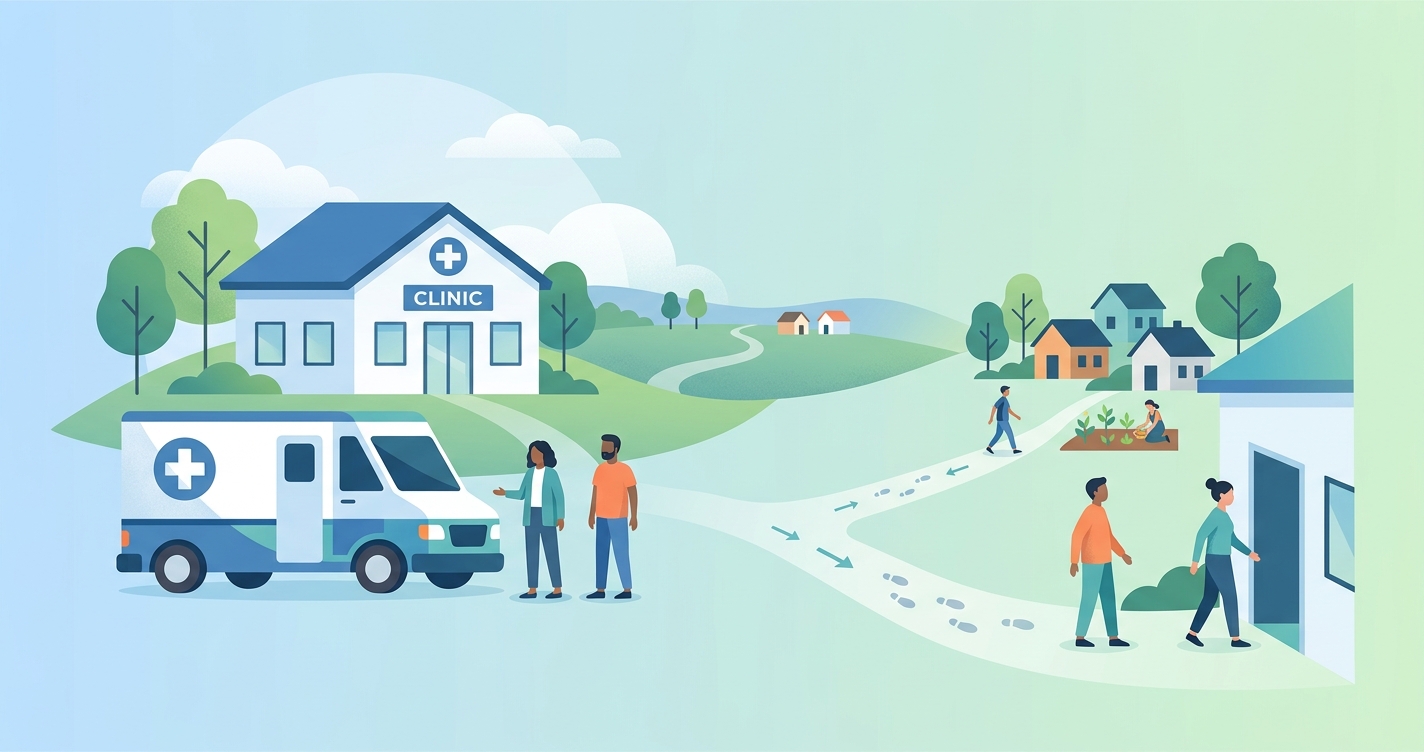
The basic mechanism is straightforward. Screening finds people who might otherwise stay home. It also creates a social cue that clinic care matters. Once a community health worker checks blood pressure, explains a pregnancy risk, or flags a sick child for referral, the clinic is no longer an abstract place in town. It becomes the next step in a live care pathway.
But the resulting visit pattern depends on what kind of problem is being screened.
Acute illness tends to produce faster clinic movement. In rural western Uganda, Jana Jarolimova, Stephen Baguma, Palka Patel, and colleagues reported in Malaria Journal that 89% of caregivers said they completed child referrals started by community health workers, and 75% overall went to the local public health center. That is what a high-urgency visit pattern looks like. People move quickly because the illness is visible and the reason for the visit is easy to understand.
Chronic disease screening creates a different pattern. In the 2025 Journal of Health, Population and Nutrition study from eastern Uganda, Andrew Marvin Kanyike, Raymond Bernard Kihumuro, Timothy Mwanje Kintu, and colleagues screened 5,215 adults for hypertension through Village Health Teams. They found elevated blood pressure in 22.4% of participants. Yet only 23.8% accepted referral, and only 24.8% of those reached the facility. Even so, the intervention still increased the health center's monthly average of new hypertensive patients from 4.6 to 12.7. That is the rural clinic pattern I keep coming back to: screening can raise facility demand even when referral completion is weaker than teams hope.
The kinds of clinic visit changes rural screening programs usually produce
| Visit pattern after screening | What it looks like in practice | What usually drives it |
|---|---|---|
| Immediate referral surge | Short-term rise in same-week clinic visits | Acute symptoms, clear danger signs, strong CHW advice |
| Gradual preventive uptake | More routine ANC, PNC, or chronic disease follow-up over time | Repeated education, home visits, community trust |
| Uneven attendance | High screening numbers but low facility arrival | Transport cost, low urgency, confusing referrals |
| Case-mix shift | Clinics see more newly identified hypertension, maternal risk, or child illness cases | Screening reaches people who were previously undiagnosed |
| Return-visit bottleneck | First visit happens, later follow-up drops off | Cost, workload, medicine availability, long travel time |
That table looks tidy, but real programs often show two or three of these patterns at once. A district can see stronger maternal care attendance, weak chronic disease follow-up, and one-time referral spikes after outreach days, all in the same quarter.
- Screening usually changes who comes to the clinic, not just how many people come.
- Referral quality matters as much as screening volume.
- Rural clinics often feel the effect of screening first through workflow pressure, then through reporting data.
- The biggest gap is often between first referral and repeat care.
Industry applications and field scenarios
Maternal and newborn programs
Maternal screening and household outreach often change clinic behavior more gradually than emergency child referrals do. A 2024 BMC Pregnancy and Childbirth paper on the COMONETH project in eastern Uganda found that community-facility linked interventions increased the odds of attending four ANC visits (OR 1.26) and eight ANC visits (OR 2.27), while postnatal care use also rose (OR 1.40). That is a good example of screening and community engagement reshaping repeat clinic attendance instead of just generating one-off visits.
There is a similar signal in earlier work from eastern Uganda. A quasi-experimental study on community-level intervention and antenatal care attendance found a 5.5% net increase in completion of at least four ANC visits among postpartum women. Not every screening-linked program changes early initiation of care, but many do improve continued attendance once women are already in the system.
Community hypertension and NCD screening
This is where rural visit patterns get messy. Hypertension screening can reveal a lot of hidden disease burden, but many people do not feel sick enough to prioritize a clinic trip. The result is a partial demand shift: clinics start seeing more newly diagnosed patients, but not as many as the screening denominator would suggest.
That does not mean the screening failed. It means the health system has to convert awareness into actual attendance. In practice, that usually depends on repeat counseling, realistic referral destinations, and some way of checking who made it to the clinic.
Child health and integrated case management
When a child is visibly ill, clinic visit patterns are more immediate. Jarolimova and colleagues' Uganda referral study captured that logic well. Community screening and triage did not merely produce data. They sent caregivers toward facilities quickly, and most of those visits could be verified.
For rural clinic managers, child screening often shows up as a burst of demand that strains staffing in the short term but may also improve earlier treatment and reduce worse complications later.
Current research and evidence
The broader systems literature helps explain why these patterns vary.
In Uganda's well-known randomized field experiment, Martina Björkman and Jakob Svensson found that community-based monitoring increased provider effort and raised general outpatient utilization by 20%. Their intervention was not a narrow screening pilot, but it remains useful because it shows how information, accountability, and community engagement can move clinic traffic. People do not only visit facilities because disease prevalence changes. They also visit because the system feels more responsive.
The 2018 WHO guideline on optimizing community health worker programmes makes a similar point from a policy angle. It treats community health workers as part of the health system rather than a side program. That matters because rural clinic visit patterns change most when screening, referral, supervision, and facility readiness are linked. If those pieces are disconnected, screening may identify need without creating sustained care use.
Then there is the referral evidence. Jarolimova and colleagues showed that community health worker referrals for child illness in rural Uganda can produce high completion. Kanyike and co-authors showed that hypertension screening can still increase new clinic cases even when referral acceptance remains low. Put together, those studies say something pretty plain: rural clinic demand after screening is condition-specific. Programs should stop expecting one universal attendance pattern.
I also think the maternal evidence deserves more attention than it gets. The COMONETH findings suggest that community-facility linked work can change not just one clinic decision, but repeated care behavior across pregnancy and the postnatal period. That is a more durable systems effect than a single outreach-day surge.
What program teams should watch in rural clinic data
A lot of teams focus on screening totals because they are easy to report. The more useful question is what happens next in the clinic register.
The metrics that usually matter most are:
- same-week referral arrivals after screening
- new-case mix by condition
- repeat attendance within 30 to 90 days
- missed follow-up after the first facility contact
- variation by village, weekday, season, and transport access
Those patterns tell you whether screening is creating care access, temporary congestion, or mostly unrealized demand.
For grant-making bodies and academic partners, this is where routine clinic data becomes more valuable than a glossy outreach summary. A screening program may look successful on field activity alone while still producing uneven facility engagement. Or the opposite can happen: a modest village screening effort can quietly shift ANC or NCD attendance in a way that only becomes visible months later.
For related reading on this microsite, see After the Scan: How Referral Pathways Work in the Field and How Health Screening Programs Build Trust in Communities.
The Future of Rural Clinic Visit Patterns After Screening
The next generation of rural screening programs will probably be judged less by how many people they touch in the field and more by how clearly they change care-seeking patterns afterward.
That means tighter links between village screening data and facility records. It means separating first visits from repeat visits. It means asking whether clinics are seeing the right patients at the right time, not just more patients. And it means building screening workflows that frontline teams can actually sustain.
I would expect the strongest programs to be the boring ones: simple referral logic, repeated follow-up, and enough data discipline to show whether community outreach is changing real utilization. That is also where lighter digital tools may matter. If they help field teams identify risk earlier and connect village activity to clinic reporting, they become more than a gadget. Readers tracking that broader shift can find more on the Circadify research blog.
Frequently Asked Questions
How does health screening change clinic visit patterns in rural areas?
It usually changes both volume and timing. Some screenings create immediate referral visits, while others gradually increase preventive or chronic-care attendance over weeks or months.
Why do rural screening programs sometimes produce low clinic follow-up?
Common reasons include transport cost, long distance, low perceived urgency, weak explanation of the result, and clinics that feel hard to access or unprepared for referrals.
Do screening programs always increase clinic visits?
Not evenly. They may increase new case detection without producing strong repeat attendance. The effect depends on the condition, the referral pathway, and how much trust the community has in the clinic.
What rural clinic metric matters most after screening?
There is no single metric, but same-week referral completion and repeat follow-up are usually more informative than raw screening counts.
Why are community health workers so important in this process?
They explain results, shape referral decisions, and often determine whether screening becomes an actual clinic visit or just a recorded encounter in the field.